
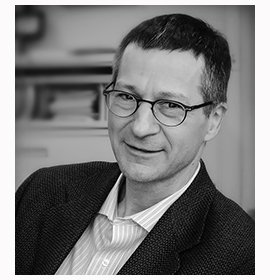
 In this episode I speak with René Provost, professor of law at McGill University Faculty of Law in Montreal. We talk about his recent and widely acclaimed book, Rebel Courts: The Administration of Justice by Armed Insurgents. We discuss the methodology he employed in researching this deep and rich ethnography of rebel courts, in conflicts ranging from Afghanistan, Iraq, and Syria, to Sri Lanka, Colombia, and the DRC, and some of the significant challenges and risks that such research entailed. From there we dive into how he assesses the legality and validity of the administration of justice by armed groups, and how the very idea of rebel courts challenges many state-centered conceptions of law and justice and the rule of law, which in turn takes us into an exploration of legal pluralism and meaning of the rule of law itself. We also delve into a number interpretive issues surrounding the meaning of “regularly constituted courts” in IHL, and the paradox of states requiring armed groups to comply with and implement IHL while rejecting their attempts to administer justice in the process. All in all, it is a fascinating discussion that ranges from legal anthropology and legal theory to certain technical aspects of IHL and human rights law.
Materials:
– Rebel Courts: The Administration of Justice by Armed Insurgents.
Recommended Reading:
– Stuart Elden, The Birth of Territory (2013);
– Martti Koskeneimmi, The Gentle Civilizer of Nations: The Rise and Fall of International Law 1870-1960 (2001);
– Sarah M.H. Nouwen, Complimentarity in the Line of Fire: The Catalyzing Effect of the International Criminal Court in Uganda and Sudan (2013).
 In this episode I speak with
  A conversation with
  In this episode I speak with
  In this episode I speak with


 In this episode I speak with Samuel Moyn, who is a Professor of Jurisprudence at Yale Law School and Professor of History at Yale University. Sam has written a number of books on issues at the intersection of history and international human rights, but we here discuss his most recent book, Humane: How the United States Abandoned Peace and Reinvented War. Taking off from an insight of Leo Tolstoy’s, the book provocatively explores how an increasing focus on the humanization of war may have made us more accepting of armed conflict, and thereby undermined the movement to constrain the resort to war. In our discussion we explore some of the historical accounts that form the premises of this argument, including the claim that IHL did little to make war more humane until after the Vietnam war, particularly in the history of Western conflicts with non-white peoples; how armed conflict become far more humanized in the so-called “global war on terror;” and how this increasing focus on humanizing war has resulted in a corresponding decline in efforts to constrain the resort to war. We dig into the nature and implications of this claimed inverse relationship, and what forces and actors he thinks help to explain the phenomenon, and end with the question of what might might be done, and by whom, to address the problem of this declining focus on preventing war – an urgent question in the circumstances.
 In this first episode of Season 3 of the podcast, I speak with
  In the last episode of Season 2, I speak with
 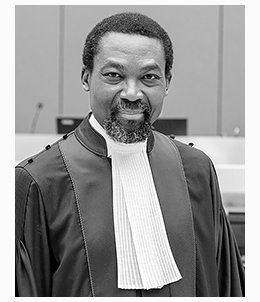 In this episode, I speak with