

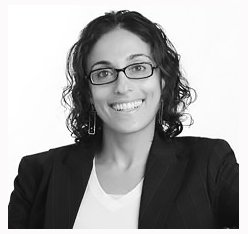
 In this episode I speak with Monica Hakimi of Columbia Law School and Janina Dill of the University of Oxford about the legal implications of the unlawful US and Israeli war attacks on Iran. We begin by establishing the unlawfulness under jus ad bellum before turning to the larger and more unsettling questions raised by this moment: whether the UN Charter system on the use of force is dying or already dead, and what distinguishes this crisis from prior violations. Janina argues that the preventative self-defense being advanced by the US, if normalized, would be fundamentally incompatible with the rule of law, drawing on the German concept of Rechtsstaatlichkeit to show why a system in which states use force based on unilateral threat assessments is not a legal order but a regime of self-help. Monica situates the crisis within longer structural trends — the slow transfer of decision-making authority away from the Security Council and toward individual states acting unilaterally, the erosion of US commitment to the system that long predates the Trump administration, and the failure of states collectively to rally behind the Charter when it mattered. From there, we explore what states, as well as international lawyers and legal scholars should be doing in a moment when unlawfulness has given way to open lawlessness and complete disregard for the law. A rich and urgently important conversation.
Materials:
– Janina Dill, “The Illegality of the US Attacks Against Venezuela is Beyond Debate – How the World Reacts is Critical,” University of Oxford Expert Comment, Jan. 7, 2026.
– Monica Hakimi, “The End of the U.S.-Backed International Order and the Future of International Law,” 119 American Journal of International Law, 279 (2025) (with Jacob Katz Cogan).
Reading Recommendations:
Monica Hakimi:
– Mark Mazower, Governing the World: The History of an Idea, 1815 to the Present (2012).
– Lauren Benton, A Search for Sovereignty: Law and Geography in European Empires, 1400–1900 (2010).
– American Journal of International Law, Vol. 120, Special Issue 1: “The Past and Future of International Law” (January 2026).
Janina Dill:
– The international law blogosphere: Just Security, EJIL:Talk!, Opinio Juris, Articles of War.
– Philippe Sands, East West Street: On the Origins of “Genocide” and “Crimes Against Humanity” (2016).
– Annette Stimmer, The Politics of International Norms (2025).
Craig Martin:
– Philippe Sands, The Last Colony: A Tale of Exile, Justice and Britain’s Colonial Legacy (2022).
 In this episode


 In this episode
  In this episode I speak with
  In this episode I speak with Samuel Moyn, who is a Professor of Jurisprudence at Yale Law School and Professor of History at Yale University. Sam has written a number of books on issues at the intersection of history and international human rights, but we here discuss his most recent book, Humane: How the United States Abandoned Peace and Reinvented War. Taking off from an insight of Leo Tolstoy’s, the book provocatively explores how an increasing focus on the humanization of war may have made us more accepting of armed conflict, and thereby undermined the movement to constrain the resort to war. In our discussion we explore some of the historical accounts that form the premises of this argument, including the claim that IHL did little to make war more humane until after the Vietnam war, particularly in the history of Western conflicts with non-white peoples; how armed conflict become far more humanized in the so-called “global war on terror;” and how this increasing focus on humanizing war has resulted in a corresponding decline in efforts to constrain the resort to war. We dig into the nature and implications of this claimed inverse relationship, and what forces and actors he thinks help to explain the phenomenon, and end with the question of what might might be done, and by whom, to address the problem of this declining focus on preventing war – an urgent question in the circumstances.
 In the last episode of Season 2, I speak with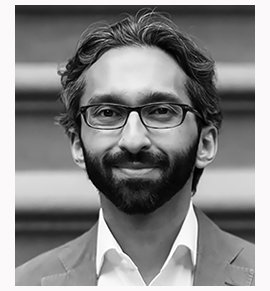
 In this episode I discuss the legal issues raised in the Gaza conflict of May 2021, with Professors
 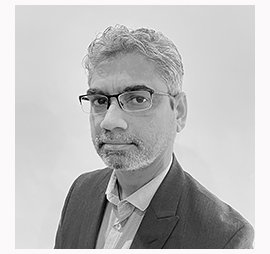 In this episode, I speak with
  In this episode I speak with