
 In this episode Tom Dannenbaum, a professor of international law and Co-Director of the International Law and Governance Center at The Fletcher School of Law & Diplomacy at Tufts University, discusses his work on the war crime of intentional starvation of civilians as a method of warfare. We begin with an analysis of the proper interpretation and operation of the prohibition on starvation as a method of warfare in International Humanitarian Law, as provided for in the Additional Protocols to the Geneva Conventions and customary international law, and how this prohibition applies in the context of an encirclement siege, and how it relates to military necessity and the principle of distinction. We then turn to his contribution to the discourse on the best interpretation of the criminal prohibition in the Rome Statute. This involves a discussion of how best to understand the term “method of warfare,” what precisely constitutes the actus res of the crime, what is the nature of the intent that is required, and what the underlying wrong is said to be – and Tom’s claim that the incremental and drawn-out process of starvation and deprivation, far from being a mitigating factor, is precisely what makes the crime distinct, and informs how we should think about the actions that are prohibited. Finally, we turn to discuss the issue of the current siege of Gaza, informed by this theoretical analysis of how the relevant IHL and ICL prohibitions operate.
Materials:
– “Siege Starvation: A War Crime of Societal Torture,” 22 Chicago Journal of International Law (2022).
– “Criminalizing Starvation in an Age of Mass Deprivation in War: Intent, Method, Form, and Consequence,” 55 Vanderbilt Journal of International Law 681 (2022).
– “The Siege of Gaza and the Starvation War Crime,” Just Security, Oct. 11, 2023.
Reading Recommendations:
– Naz Modirzadeh, “Cut These Words: Passion and International Law of War Scholarship,” 61 Harvard International Law Journal 1 (2020).
– Bridget Conley, Alex de Waal, Catriona Murcdoch, and Wayne Jordash, eds., Accountability for Mass Starvation: Testing the Limits of the Law (2022).
– Carsten Stahn, Justice as Message (2020).
 In this episode I speak with
  A conversation with
  In this first episode of Season 3 of the podcast, I speak with
  In the last episode of Season 2, I speak with
 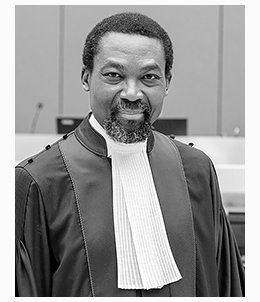 In this episode, I speak with
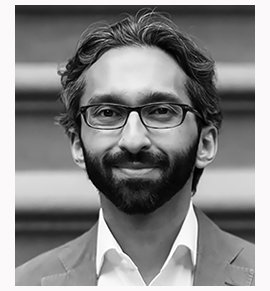
 In this episode I discuss the legal issues raised in the Gaza conflict of May 2021, with Professors
  In this episode, I speak with
  In this episode I speak with Yasuyuki Yoshida, Professor of International Law at Takaoka University in Toyama Japan, and former Captain(N) in the Japanese Maritime Self-Defence Force. We discuss Japan’s posture on various aspects of the jus ad bellum regime, and whether or how its position may have changed as a result of the “reinterpretation” of Article 9 of the Constitution of Japan. Article 9 famously renounces the threat or use of force, and has long been understood to prohibit any collective self-defense or use of force authorized by the UN Security Council, but in 2014 the government purported to “reinterpret” the provision to relax its constraints. We discuss how the new policy relates to the jus ad bellum, and what Japan’s position is on a number of the more controversial elements of the doctrine of self-defense. The discussion includes surprising insights on how Japan would view a Chinese incursion on the Senkaku Islands, whether Japan would help defend Taiwan, and whether the US could invoke collective self-defense of Japan for preemptive strikes on North Korea. Another fascinating conversation!
 In this episode I speak with