
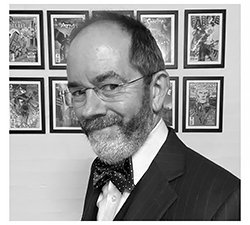
 In this episode, I speak with Douglas Guilfoyle, Associate Professor at the University of New South Wales, Canberra, in Australia. We discuss the recent report of the Inspector-General of the Australian Defence Force on his investigation into war crimes – including murder and cruel treatment of civilians and detainees – alleged to have been committed by members of the Australian Special Forces deployed in Afghanistan. We discuss the impetus for the investigation, the nature of the findings and recommendations, and explore in some detail the report’s treatment of the issue of command responsibility, and its finding that no officers had sufficient knowledge of the misconduct so as to attract criminal liability. This includes a discussion of how the provisions on command responsibility in the Rome Statute were subtly but perhaps significantly adjusted when implemented in the Australian Criminal Code. This leads to the question of what influence the principle of complimentarity and possible ICC involvement may have had in shaping the government’s handling of the issues. Finally we discuss some of the structural, organizational, and cultural features of the Australian forces in Afghanistan that were said to have contributed to the unlawful conduct.
Materials:
– “Australian War Crimes in Afghanistan: The Brereton Report,” EJILTalk!, Nov. 23, 2020.
– The Hon. PLG Brereton, Inspector-General of the Australian Defence Force Afghanistan Inquiry Report, Oct. 29, 2020.
– Dan Oakes and Sam Clark, “The Afghan Files,” The ABC, Jul. 10, 2017.
Reading Recommendations:
– Monique Cormier, The Jurisdiction of the International Criminal Court over Nationals of Non-State Parties, (2020).
– Jessie Hohmann and Daniel Joyce, eds., International Law’s Objects, (2019).
– Thomas Rid, Active Measures: The Secret History of Disinformation and Political Warfare, (2020).
 In this episode, I speak with
  In this episode, I speak with
  In this episode, I speak with
  In this episode, I speak with
  In this episode,
 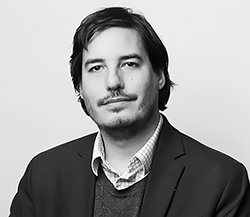 In this episode, I speak with Alonso Gurmendi Dunkelberg, Professor of Law at the Universidad del Pacifico in Lima, Peru. We discuss his recent writing on the Latin American approaches to, and perspectives on, the jus ad bellum regime and principles of non-intervention. Drawing on a rich history of the Latin American response to the Monroe Doctrine and European approaches to intervention in the 19th Century, Alonso explains how the distinct Latin American perspectives developed, found expression in the Montevideo Convention of 1933, and contributed to the Latin American embrace of the U.N. system in 1946. He explains how a misunderstanding of the Latin American perspective leads to common misinterpretations of Latin American positions and responses to recent interventions, such as those in Syria, and debates over doctrinal issues, such as the validity of humanitarian intervention or the unwilling or unable doctrine. We round off our discussion by putting it all into the context of Third World approaches to international law. An eye-opening romp through history and theory!
 In this episode, I speak with
  In Episode 5, I speak with
  In this episode, I speak with